BRNO UNIVERSITY OF TECHNOLOGY
Antonínská 548/1, 601 90 Brno
Czech Republic
phone numbers list
e-mail: vut@vutbr.cz
international@vutbr.cz
http://www.vutbr.cz/en


How to automatically process large volumes of data from various sources, how to optimize IT processes in project management using artificial intelligence, or why do Czech households waste water? These are some of the topics covered in the most interesting domestic theses on economic topics that made it to the finals of the 7th annual Atlas Copco Services Award competition.
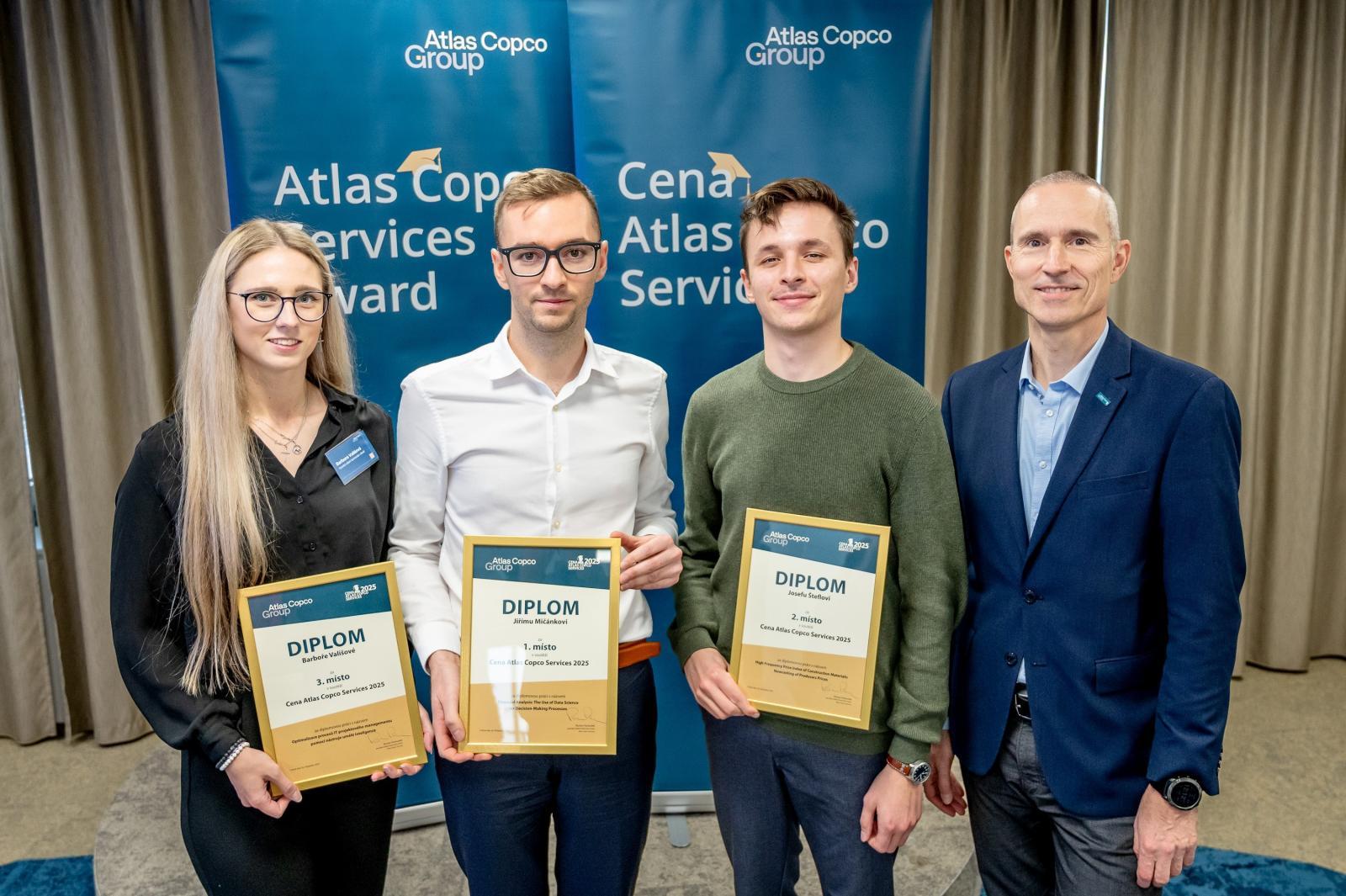
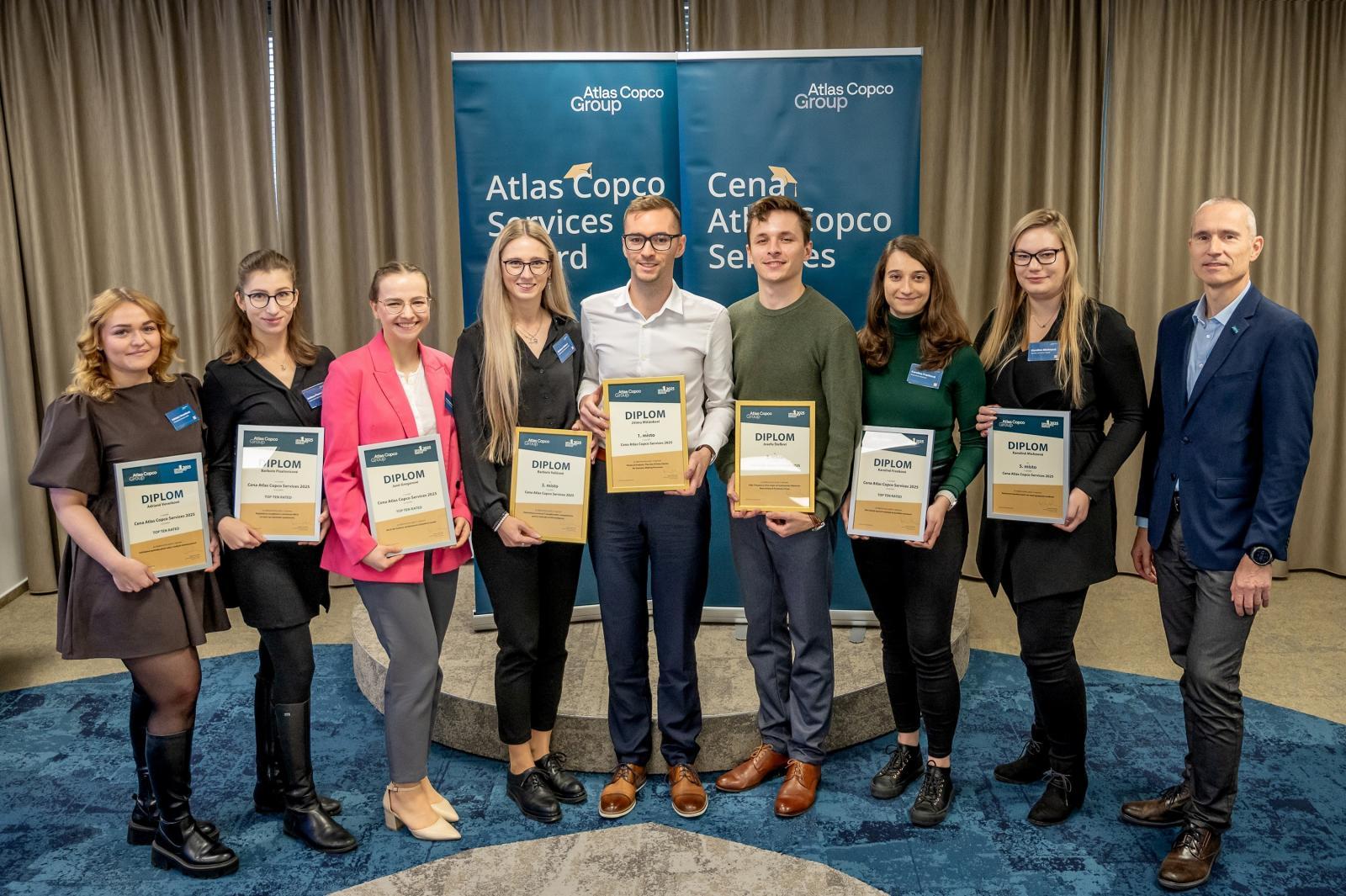
The award ceremony for the competition, which received forty diploma theses from all Czech universities, took place on November 26, 2025, in Brno. A total of 10 graduates and their thesis supervisors received awards.
"Every year, a number of interesting, innovative, unconventional, and groundbreaking theses are written at domestic economics faculties. This testifies not only to the quality of our universities and the young generation of students, but also to the excellent professional guidance that students receive. Atlas Copco Services cares deeply about supporting economic education. That is why we have decided for the seventh time to reward students who have great ideas and also to recognize their teachers," explained Roman Pavloušek, CEO of the Atlas Copco Services Financial Center, explaining the purpose of the competition.
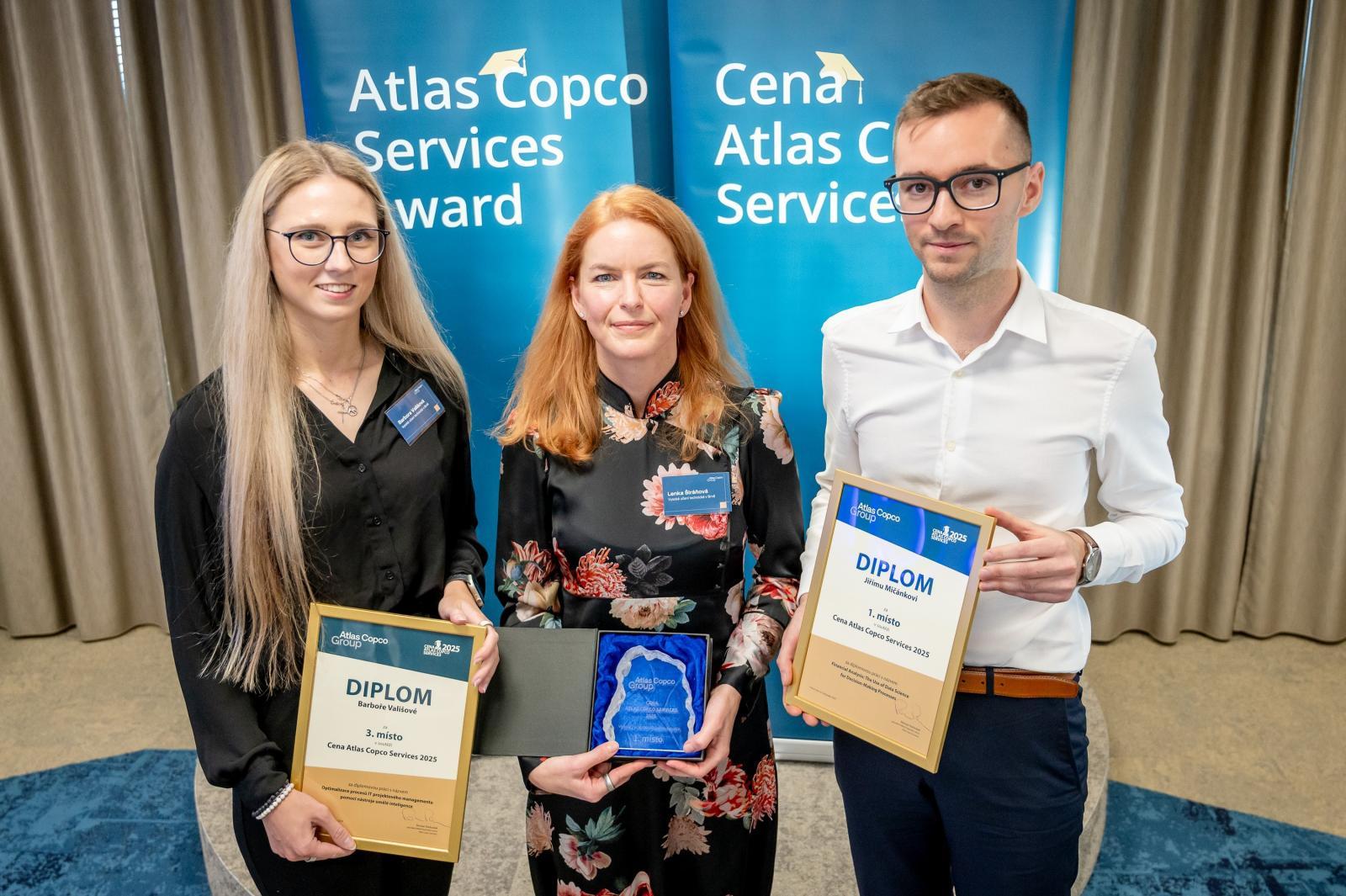
First place in the competition went to Jiří Mičánek, a graduate of the Faculty of Business and Management at the Brno University of Technology, with his thesis entitled "Financial Analysis: Using Data Science for Decision-Making Processes." His work focused on how to simplify and speed up the financial analysis of companies, which is often complex and slow. To this end, he created a modular system in Python that does much of the work automatically and offers more accurate and comprehensive results. The author's main goal was to use data science to make analyses faster, more consistent, and more in-depth.
The framework designed by the author consists of six parts, each of which addresses a different type of analysis—from financial statements and ratios to technical analysis, stock price prediction, macroeconomic environment assessment, and market sentiment analysis. Each module can automatically download the necessary data from public sources (API) and work with it. This allows analysts to choose only the tools they need. By combining financial indicators, market sentiment, and the broader economic context, the author's system can offer a more comprehensive view than conventional analytical methods.
The silver medal in the competition for the best economic thesis went to Josef Štefl, a graduate of the Institute of Economic Studies at the Faculty of Social Sciences, Charles University. His thesis, entitled "High-frequency price index of construction materials: Current manufacturer prices," examined the potential of using big data in economics through his own weekly construction materials price index (CMPI) derived from data obtained using web scraping. The author's three-year research focused on increasing the accuracy of market development descriptions through high-frequency data, examining the relationship between construction material inflation and commodity prices, and nowcasting the official construction materials index using data obtained from the internet.
Third place in the competition went to Barbora Vališová, a graduate of the Faculty of Business and Management at the Brno University of Technology. Her thesis, entitled "Optimization of IT Project Management Processes Using Artificial Intelligence Tools," dealt with the implementation of Microsoft 365 Copilot in the project office of a selected company. The author analyzed current project management, identified areas with a high proportion of routine activities, and proposed solutions to increase the efficiency of project managers, reduce their administrative burden, and support decision-making processes, all using artificial intelligence tools.
The theses of the remaining finalists also covered a wide range of interesting and topical issues. Their authors dealt with issues such as carbon tariffs and their impact on imports into the European Union, the work-life balance of employees, the impact of option strategy indices on investor portfolios, and cryptocurrency legislation in start-up companies.
Another unconventional thesis was that of Adriana Veverková, a graduate of the Faculty of Business and Economics at Mendel University in Brno, which dealt with the sustainable consumption of drinking water in Czech households. Based on extensive questionnaire research, the author states that although most people realize that water is a precious resource, they often perceive its scarcity as a problem that does not directly affect them—either because it occurs geographically elsewhere or because it will only manifest itself in the future. Their frequent opinion that "we have enough water" shows that there is a disconnect between everyday behavior and broader impacts.
According to the author, Czechs can be divided into three large groups when it comes to water management. The first group is uninformed but receptive, with a high willingness to change their behavior, especially if people had more information. The second group consists of uninformed and passive people who do not want to change their habits and have very little motivation to manage water better. The third group consists of informed and engaged people who understand the basic context, specific savings opportunities, and the impact of their behavior, and have already implemented a number of water-saving measures in their households. Based on her research and typology of respondents, the author then presented a number of ideas for a positive information campaign that would appropriately draw attention to the issue of water waste.
"We consider the issue of water waste to be very beneficial and important – one of Atlas Copco's social engagement projects is the Water for All initiative. Through employee volunteer work, the initiative funds projects that help people access clean drinking water and sanitation facilities. Since 1984, we have helped millions of people around the world, and local Water for All organizations operate in more than 50 countries," said Roman Pavloušek, CEO of Atlas Copco Services Financial Center.
The ceremonial announcement of the results of the seventh annual Atlas Copco Services Award competition, in which nearly forty graduates participated, took place on Wednesday, November 26, in Brno. The three most successful students shared prizes totaling CZK 60,000, with the overall winner receiving CZK 30,000.
The ten finalists in this year's competition included graduates and teachers from a total of seven Czech universities. The awards went to the Faculty of Business and Management at the Brno University of Technology, the Faculty of Economics and Administration at Masaryk University in Brno, the Faculty of Business and Management at Mendel University in Brno, the Faculty of Informatics and Statistics at the University of Economics in Prague, the Masaryk Institute of Advanced Studies at the Czech Technical University in Prague, the Faculty of Social Studies at Charles University in Prague, and the Faculty of Business and Entrepreneurship in Karviná at the Silesian University in Opava.
For more information about the competition, visit www.CenaAtlasCopco.cz
This text was published as a press release by the competition organizer.
Results of last year's competition:
A revolutionary mathematical model developed by a BUT graduate could save a quarter of Czechs from heart attacks - News – BUT (CZ only)
Published: 2025-11-28 16:37
Short URL: https://www.vut.cz/en/old/f19528/d311267

BRNO UNIVERSITY OF TECHNOLOGY
Antonínská 548/1, 601 90 Brno
Czech Republic
phone numbers list
e-mail: vut@vutbr.cz
international@vutbr.cz
http://www.vutbr.cz/en